
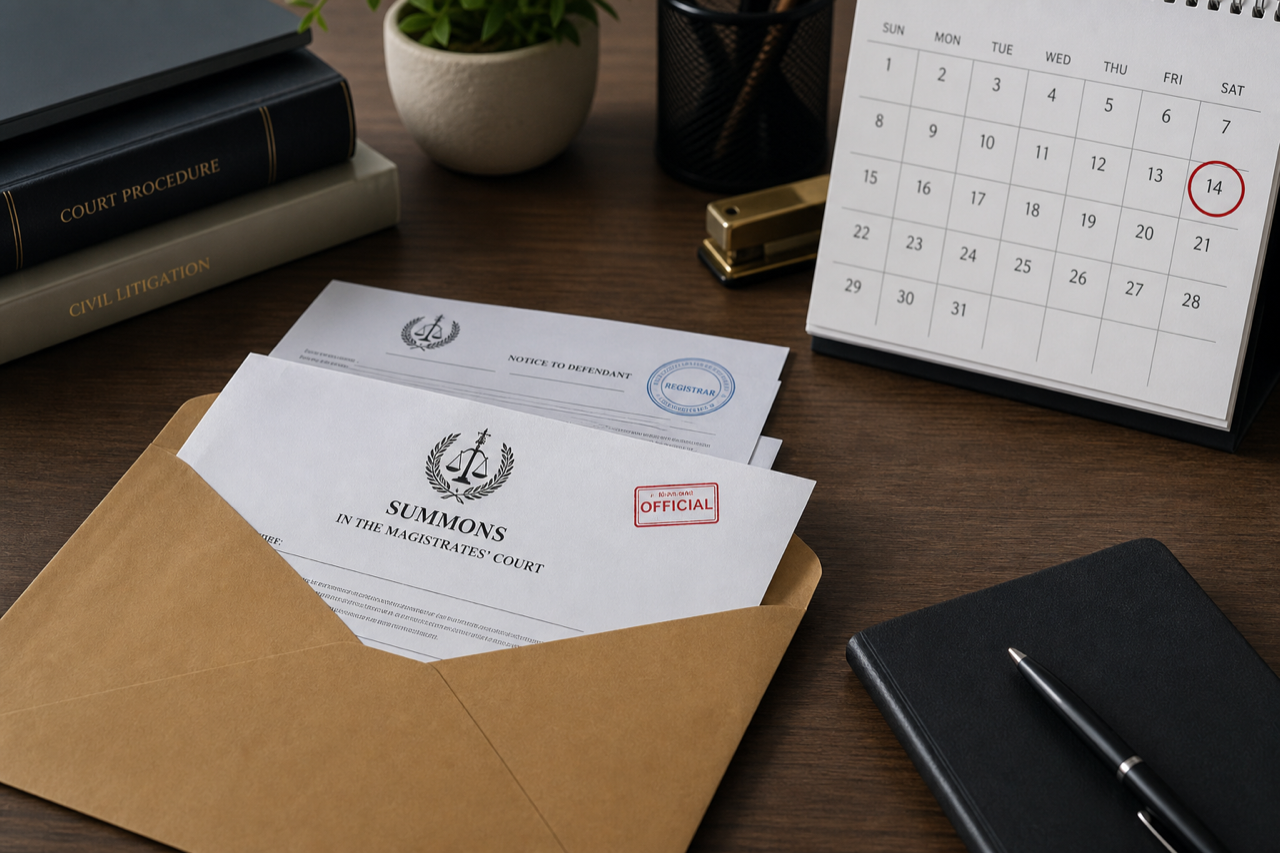
What to do after receiving a summons in South Africa
What a summons means, how to read the document, why response deadlines matter, and how to avoid default judgment.
General information only
This guide is not legal advice and does not create an attorney-client relationship with Asenati. Legal advice is provided only by an independent lawyer after they understand your specific facts.
Key takeaways
- Do not ignore a summons, even if you believe the claim is wrong.
- Check the court, parties, amount claimed, cause of action, service date, and response deadline immediately.
- If you want to oppose the claim, you may need to file the correct notice within the required time.
- Get advice before admitting liability, making payment arrangements, or signing settlement terms you do not understand.
What a summons is
A summons is a formal court document that starts or advances a civil claim against you. It usually tells you who is suing, what they claim, the court involved, and what you must do if you intend to defend the matter. It is not the same as a police charge, but it can still have serious financial and legal consequences.
Why ignoring it is risky
If you do nothing, the claimant may be able to ask for default judgment. A default judgment can affect your credit record and may lead to enforcement steps such as attachment of property, salary deductions, or further legal costs, depending on the case and court process.
The first details to check
Check the name of the court, case number, plaintiff, defendant, amount claimed, interest, legal costs, date of service, sheriff's return, and the response period stated in the summons. Also check whether the papers were served at the correct address and whether your name or business details are correct.
Work out what the claim is about
The summons may relate to debt, a loan, rent, damages, services, goods sold, an acknowledgement of debt, or another civil claim. Try to match the claim to your records. Look for invoices, contracts, bank statements, proof of payment, emails, cancellation notices, and any dispute you raised before the summons arrived.
If you agree with the claim
Even if you agree that money is owed, you may still need advice about the amount, interest, legal costs, payment terms, and whether judgment can be avoided. A written settlement may be useful, but it should be clear about deadlines, consequences of default, and whether legal action will be paused or withdrawn.
If you dispute the claim
If you dispute the claim, you may need to file a notice of intention to defend or take another procedural step within the time stated in the summons. The exact step depends on the court and type of summons. Do not assume that emailing the plaintiff is enough to defend the matter.
Common mistakes to avoid
Avoid ignoring the papers, missing the deadline, sending emotional messages, admitting liability without advice, paying into the wrong account, or relying on a verbal promise that the case is on hold. Keep all communication and proof of payment in writing.
When to speak to a lawyer
Speak to a lawyer quickly if the amount is significant, judgment could affect your employment or business, you dispute the debt, prescription may be relevant, you were not properly served, or you are unsure which document to file. Court deadlines can move quickly.
Speak to a lawyer
Need help with this exact issue?
Start a guided intake and get matched with a verified lawyer who can look at your facts, documents, and next steps.